


Elliptical vs Treadmill: Which Fits Your Training?

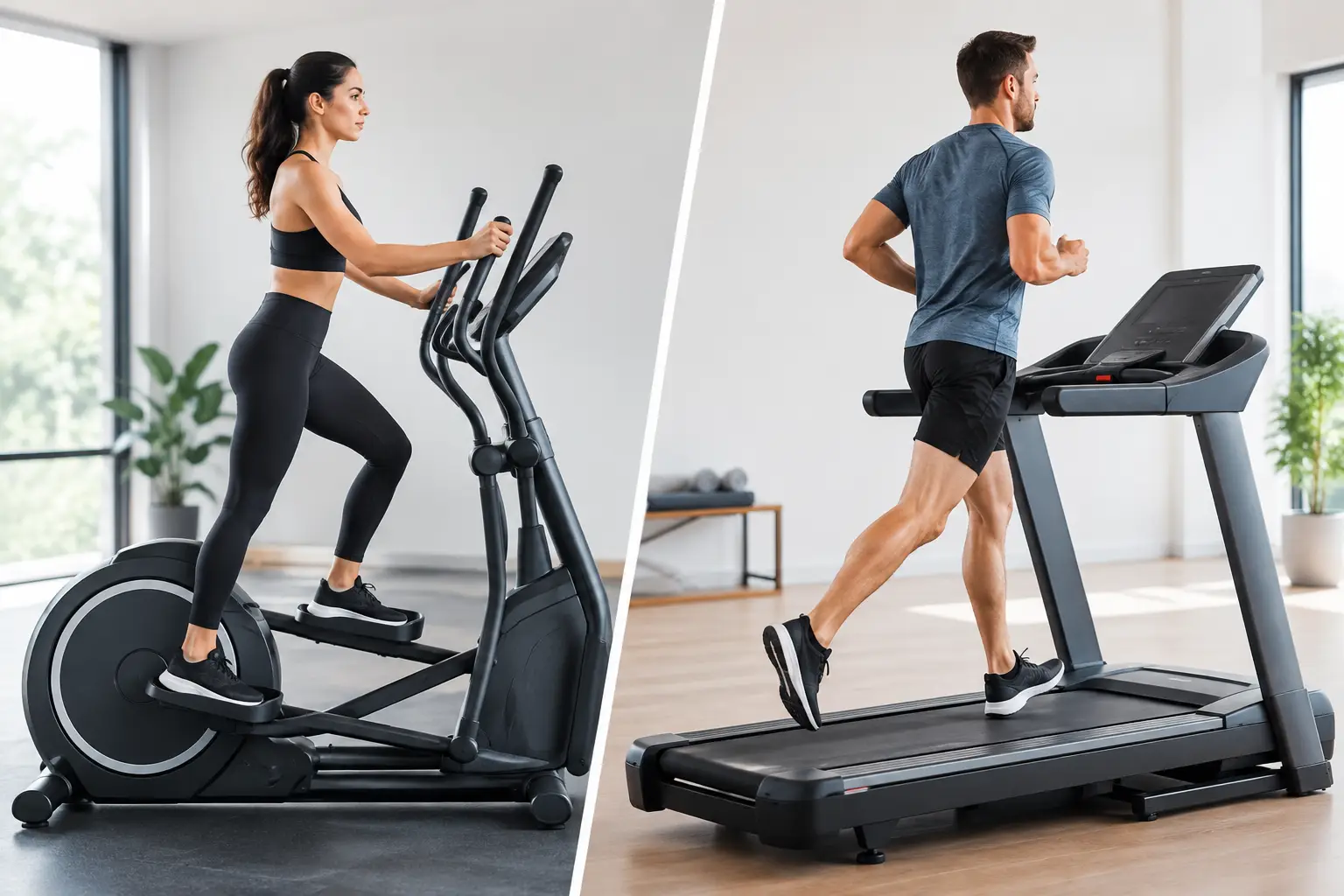
A cardio machine should earn its floor space. When comparing elliptical vs treadmill, the better choice is not simply the one that promises more calories. It is the machine you will use consistently, safely, and hard enough to support your goals – whether you are building a compact home gym, equipping a hotel fitness center, or upgrading a commercial training floor.
Both machines deliver effective cardiovascular training. The difference comes down to impact, movement pattern, workout style, available space, and the people who will use the equipment. A runner training for a 5K has different needs from a beginner protecting sore knees, just as a busy facility needs a different machine than a family buying its first piece of cardio equipment.
Elliptical vs Treadmill: The Core Difference
A treadmill recreates walking, jogging, and running on a moving belt. It is direct, familiar, and highly adaptable. You can control speed and incline to move from an easy walk to demanding hill intervals without changing your natural gait.
An elliptical uses suspended foot pedals that travel in an oval path. Your feet stay in contact with the pedals throughout the workout, reducing the repeated impact associated with running. Most ellipticals also include moving handles, allowing you to involve the upper body while your legs drive the movement.
Neither option wins for every athlete. A treadmill is usually the stronger choice for walking and running performance. An elliptical often suits users who want challenging cardio with less stress on the joints.
Choose a Treadmill for Walking, Running, and Clear Progression
The treadmill is the most versatile option for people who enjoy walking or running and want their indoor sessions to translate directly to outdoor movement. It lets you train at a specific pace, build tolerance for longer runs, perform sprint intervals, or use incline work to increase intensity without needing to run faster.
For weight management, a treadmill can be especially effective because it makes high-intensity work accessible to confident users. Running, hill walking, and incline intervals can create a demanding session in a relatively short time. The display also gives straightforward feedback: speed, time, distance, incline, and often heart rate or estimated calories.
Treadmills are a strong fit for:
- Walkers who want a reliable daily cardio routine
- Runners training for road races, sports conditioning, or endurance
- Users who prefer simple controls and a familiar movement pattern
- Facilities that need a cardio staple with broad appeal
The trade-off is impact. Walking is generally manageable for most users, but jogging and running repeatedly load the ankles, knees, hips, and lower back. Good shoes, a cushioned deck, correct form, and gradual progression matter. For someone returning from a lower-body injury or managing joint discomfort, a treadmill may not be the right starting point.
A treadmill also needs careful attention to motor strength, running surface, user weight capacity, deck cushioning, and frame stability. Home users may prioritize folding storage. Commercial buyers should focus on continuous-duty performance, heavy-use construction, service access, and a deck sized for users with different stride lengths.
The Incline Advantage
Incline training is one of the treadmill’s biggest advantages. Raising the deck increases the demand on the glutes, hamstrings, calves, and cardiovascular system while allowing many users to keep a walking pace. It is a practical option for people who want a tough session but do not want to run.
For home gyms, an incline treadmill can cover a wide range of needs, from recovery walks to challenging conditioning. In a professional setting, that flexibility helps one machine serve beginners, athletes, and regular members throughout the day.
Choose an Elliptical for Low-Impact, Full-Body Cardio
An elliptical is built for users who want sustained cardio without the pounding of running. Since the pedals support the feet through the entire movement, there is no repeated foot strike against a hard surface. That makes the elliptical a smart option for many users with sensitive joints, higher body weight, or a preference for smoother training.
The moving handles can add upper-body involvement through the shoulders, arms, chest, and back. This does not replace strength training, but it can make a steady cardio workout feel more complete and help distribute effort across more of the body.
Ellipticals work particularly well for moderate, longer-duration sessions. You can maintain a steady rhythm, increase resistance, use ramp or incline features where available, and reverse the pedal direction to change muscle emphasis. For users who dislike running but still want to build work capacity, that variety can make consistency easier.
The main limitation is specificity. Elliptical training improves cardiovascular fitness, but it does not prepare the body for the exact impact and mechanics of running. A runner can use it for cross-training or recovery, but should still run if race performance is the goal.
Not Every Elliptical Feels the Same
Elliptical design matters more than many buyers expect. Stride length affects comfort, especially for taller users. A stride that is too short can feel cramped and unnatural, while a smooth, stable drive system makes a major difference during longer workouts.
Front-drive, rear-drive, and center-drive ellipticals can each feel different underfoot. Rather than choosing by design alone, consider who will use the machine, how much space is available, and whether the unit provides a natural stride at the intended resistance level. For shared home gyms and commercial facilities, a solid frame, high user capacity, and easy-to-reach controls should be non-negotiable.
Calories, Weight Loss, and Workout Intensity
The elliptical vs treadmill calorie question has no universal answer. Calorie burn depends more on body size, workout duration, resistance, speed, incline, effort level, and fitness level than the machine itself.
A hard treadmill run may burn more calories per minute than an easy elliptical session. But a challenging elliptical workout with strong resistance, active handles, and sustained effort can be equally demanding. The better machine for weight loss is the one you can use regularly enough to create a calorie deficit while supporting your wider training plan and nutrition habits.
For many people, lower impact supports greater consistency. If a treadmill leaves your knees sore after every session, using an elliptical four or five times per week may produce better long-term results than forcing two difficult runs. On the other hand, if you genuinely enjoy incline walks or running, a treadmill can make your cardio routine more engaging and easier to progress.
Do not rely too heavily on the calorie number shown on a console. Treat it as a useful estimate, not a precise measurement. Focus on repeatable markers such as session length, heart-rate response, pace, resistance, incline, and how quickly you recover.
Space, Safety, and Equipment Selection
Before choosing either machine, measure more than the footprint. Treadmills need open clearance behind the deck for safety, while ellipticals need enough ceiling height for the user standing on the pedals. Taller users should check headroom carefully, especially in rooms with low ceilings.
A folding treadmill can be practical in apartments and multipurpose rooms, but folding designs are not automatically the best choice for serious runners. For frequent, higher-intensity use, prioritize a stable running deck and dependable motor. An elliptical usually has a larger fixed footprint, although it can be quieter and more suitable for upstairs homes because it produces less running impact.
For a gym, hotel, school, or corporate wellness space, buying decisions should go beyond the initial price. Consider expected daily usage, user profiles, power requirements, placement, warranty terms, maintenance planning, and access for future servicing. Commercial cardio equipment should be selected as part of a complete training environment, with enough circulation space for users to move safely.
Which Machine Is Right for You?
Choose a treadmill if your priority is walking, running, pace-based training, or incline conditioning. It is the clearer choice for runners and for anyone who wants a familiar, measurable way to build speed and endurance.
Choose an elliptical if low-impact training, joint comfort, and full-body cardio are higher priorities. It is especially useful for steady conditioning, cross-training, and users who want to work hard without repeated running impact.
If space and budget allow, pairing both machines creates the strongest cardio setup. The treadmill handles running performance and incline walks; the elliptical gives you a lower-impact alternative for recovery days, longer sessions, and varied programming. Riyadha Trading can help home-gym buyers and facility teams match cardio equipment to their training goals, available space, and expected usage.
The right choice is the machine that makes tomorrow’s workout feel possible. Pick for the body you have, the training you enjoy, and the routine you can sustain week after week.